Upgrading to ScrewDrivers v7 Pro/Enterprise Edition
Overview
This guide walks you through upgrading from ScrewDrivers v6 (or Simplify Printing v6) to ScrewDrivers v7. This guide covers the Pro/Enterprise editions. Pro and Enterprise editions include SQL database, Administration console, and Print Server components for centralized management.
The upgrade process involves:
- Preparing your environment with prerequisites
- Upgrading licensing infrastructure (Pro/Enterprise)
- Upgrading your App Servers/VDI hosts or Print Servers
- Configuring Auto Client Update settings (v7 feature)
- Migrating client workstations from v6 to v7
In v7, "Screwdrivers" is the product name for what was called "Simplify Printing" in v6. The file naming convention reflects this:
- ScrewDriversProOrEnterprise_7.x.x.xxxxx_x64.exe (Pro and Enterprise editions)
- ScrewDriversClient_7.x.x.xxxxx_x64.msi (client-side for all editions)
Always download the latest version from the Tricerat downloads share (link available from your account team or Tricerat Support) for the most recent bug fixes and features, and check the release notes for version-specific requirements.
Pre-Upgrade Checklist
Before beginning the upgrade, complete these essential preparation steps.
1. Document Current Configuration
Before uninstalling v6, document your current settings so you can replicate them in v7:
Server Settings to Document:
- Printer Naming convention (how printers are named when created in sessions)
- Printer Creation settings (auto-create, manual, profile-based)
- Licensing configuration (license server address or nodelock key)
- Custom settings or policies you've configured
Client Settings to Document:
- Client-side configuration options (if any custom settings were deployed)
- Any printer filters or exclusions
- Custom registry settings or policies
Take screenshots of the v6 configuration screens or export settings if available. This ensures accurate replication in v7.
2. Install .NET Framework 4.8
ScrewDrivers v7 requires .NET Framework 4.8 on all systems that will run v7 software.
Installation:
- .NET 4.8 installer is provided with the ScrewDrivers v7 installers
- Install on all App Servers/VDI hosts
- Install on any systems that will run the v7 client (if applicable)
Verify Installation:
# Check if .NET 4.8 is installed
Get-ChildItem 'HKLM:\SOFTWARE\Microsoft\NET Framework Setup\NDP\v4\Full\' |
Get-ItemPropertyValue -Name Release |
ForEach-Object { $_ -ge 528040 }
# Returns True if .NET 4.8 or higher is installed
3. Upgrade and Activate License
Upgrade License Server:
If you're using Node Locked Server (NLS) licensing, skip steps 1 and 2 entirely—the license server steps only apply to Concurrent Server (CCS) or Concurrent User (CCU) licensing models.
- Uninstall old license server (if using Concurrent Server or Concurrent User licensing)
For CCS/CCU licensing:
Uninstall the existing v6 Tricerat License Server The v6 license server cannot serve v7 licenses, requiring upgrade
- Install new license server (CCS/CCU licensing only)
Install the latest Tricerat License Server (v6.0.7.0 or later is required for ScrewDrivers 7.9.6+, and the newest version is backward compatible with all v6 and v7 releases):
Download the latest TriceratLicenseServer installer from the Tricerat downloads share (link from your account team or Tricerat Support) The new license server can serve both v6 and v7 licenses simultaneously This allows gradual migration—some servers running v6, others running v7 Activate your v7 licenses on the new License Server before proceeding with component upgrades.
Activate the v7 license key
- Obtain your v7 license key from Tricerat
- Activate the v7 key on your License Server
- If using nodelock licensing, obtain and prepare your v7 nodelock key
- Verify the License Server is running and accessible
v6 and v7 licenses are separate. You must activate a v7 license before beginning the upgrade. Contact Tricerat sales if you need to obtain v7 licensing.
4. Plan Downtime
Schedule the upgrade during a maintenance window:
- Users will lose access to printers during the server upgrade
- Plan for 30-60 minutes per server for uninstall, install, and configuration
- Client upgrades can typically be rolled out gradually (v6 clients work with v7 servers temporarily)
Upgrading Print Servers
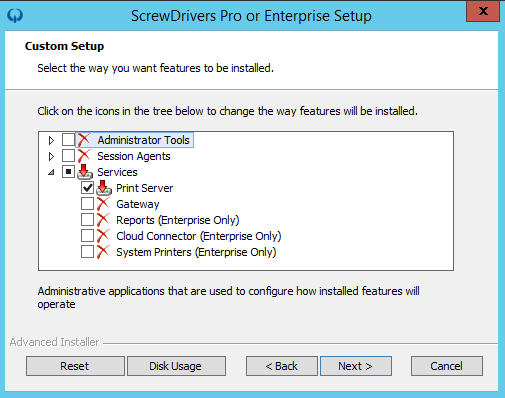
The v7 Print Server is compatible with v6 Simplify Printing, so in a staged upgrade, upgrade your Print Server agents first — v7 Session Agents can't communicate over non-TLS connections to the older Print Server agent. If you use v6 Proxy agents, upgrade them to the v7 Connector next. After that, upgrade your database and Session Agents as you're able.
Step 1: Uninstall v6 Simplify Print Server Agent
- Open Programs and Features (or Add/Remove Programs)
- Locate Simplify Print Server v6 in the installed programs list
- Click Uninstall and follow the prompts
- Reboot the system after uninstallation completes
- Run the ScrewdriversProOrEnterprise EXE and select the following.
Upgrading App Servers/VDI Hosts
The App Server (also called Session Host or VDI host) is where users connect and where printers are created in their sessions.
Step 1: Uninstall Simplify Printing v6
- Open Programs and Features (or Add/Remove Programs)
- Locate Simplify Printing v6 in the installed programs list
- Click Uninstall and follow the prompts
- Reboot the system after uninstallation completes
While not always required, rebooting after uninstalling v6 ensures all services and drivers are fully removed before installing v7.
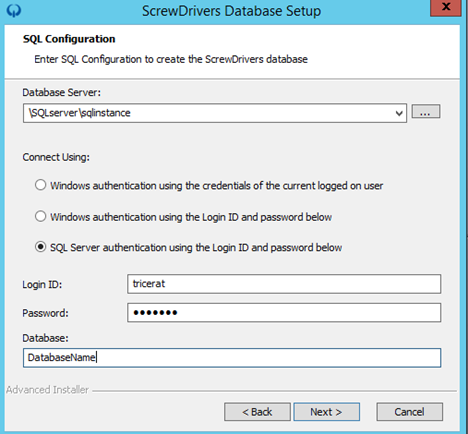
Step 2: Update Database Information
Launch the ScrewDrivers Database installer. It upgrades your database schema for v7 and points the software at the Tricerat database. Run this installer once (and only once) per environment — not on every server.
The database upgrade also initializes the new authorization data for ScrewDrivers Administration. By default, only Domain Admins, Local Admins of the machine where the installer ran, and the user who ran it can use the Administration application. Add anyone else from within Administration afterward.
Step 3: Run ScrewDrivers v7 Pro/Enterprise Installer and Select Components
The installer presents several options:
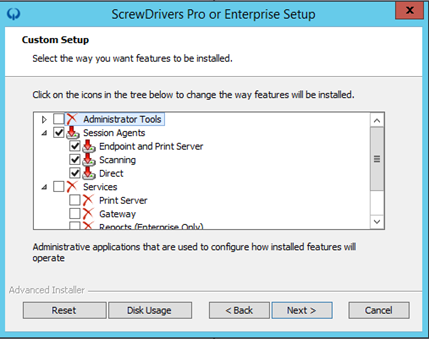
You can disable components you don't need. For example, if your organization doesn't use scanner redirection, uncheck "Scanning" to avoid installing unnecessary software.
Step 4: Configure Licensing
The installer prompts for licensing information:
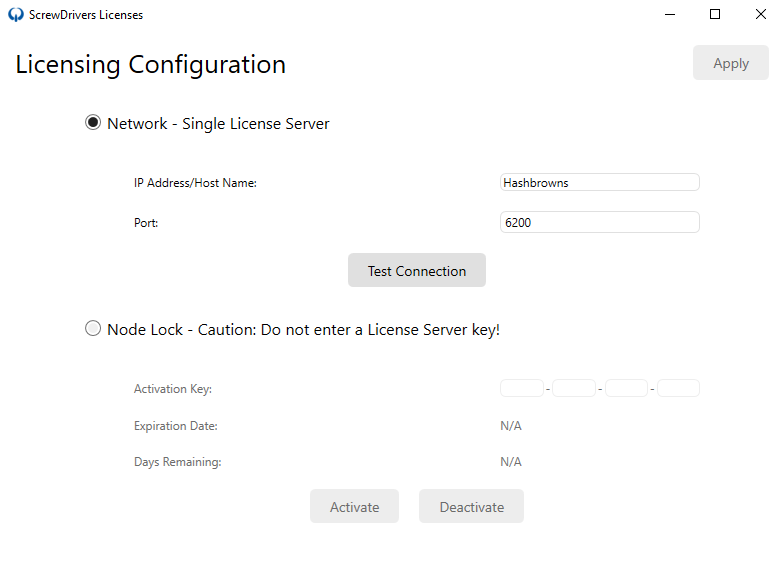
Choose your licensing method:
License Server:
- Enter the hostname or IP address of your Tricerat License Server
- Format:
licenseserver.company.comor192.168.1.100 - Verify the License Server is accessible from this machine
Nodelock Key:
- Enter your v7 nodelock license key
- Nodelock licenses are tied to specific machines
- Useful for standalone or small deployments
Step 5: Update Screwdrivers Administration
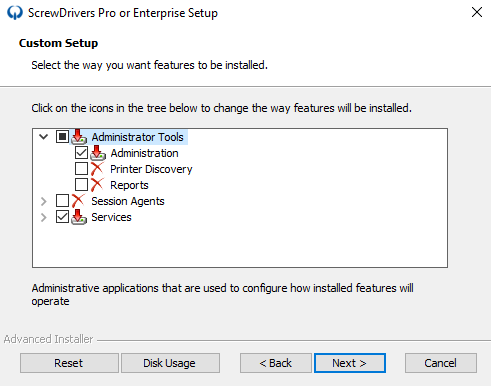
On you Management server or any system with Tricerat Simplify Console isntalled, you would want to uninstal lthe current v6 version. Then run the Screwdrivrs Pro/Entrprise installer and select the following:
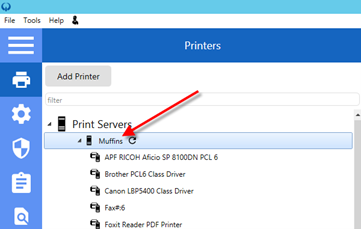
After everything is installed Open the Screwdrivers Administration console and go to your Print Server object
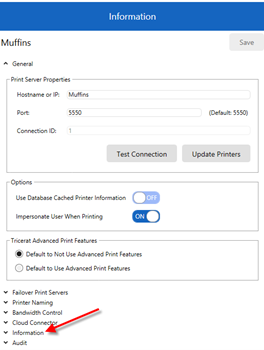
Then go to the Information column and expand the information tab
Then click the Refresh Server Information Button
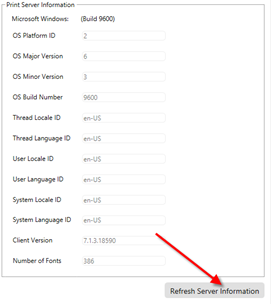
This will update the Client version listed to the updated version. Once this is done you should be good for operation.
Step 6: Complete Installation
Allow the installer to complete. This typically takes 5-10 minutes depending on system performance.
Step 7: Test Functionality
Before declaring the server upgrade complete:
- Log in as a test user on this App Server
- Verify printers appear in the user's session
- Test printing a document to ensure full functionality
- Check any scanner functionality if applicable
Step 8: Repeat for Additional Servers
Follow Steps 1-5 for each App Server or VDI host in your environment.
For Multi-Server Environments:
- Upgrade servers one at a time or in small groups
- Test functionality after each upgrade
- Keep at least one v6 server available during testing (if possible)
- Gradually migrate user sessions to upgraded servers
Upgrading End-User Clients
After App Servers/VDI hosts are upgraded to v7, migrate client workstations from v6 to v7 clients.
v6 Client Compatibility
v6 clients will work with v7 servers temporarily, allowing you to upgrade servers first and then roll out client updates gradually — but only with their current settings. The registry locations backing client settings moved in v7, so a v6 client that downloads a v7 plugin through auto client update can't place settings where the v7 plugin expects them (and vice versa). Upgrade clients to v7 as soon as practical to get full functionality.
Client Upgrade Process
The v6 client must be uninstalled before installing the v7 client. There is no in-place upgrade path.
Manual Client Upgrade
For small environments or individual workstations:
- Document client settings (if any custom configuration exists)
- Uninstall v6 client via Programs and Features
- Reboot the workstation (recommended)
- Install v7 client using the ScrewDrivers v7 client installer
- Verify functionality by connecting to a session and checking printer access
Automated Client Upgrade
For large environments with many workstations, use automated deployment methods.
Option 1: Push Uninstall and Install
Use your software deployment system (SCCM, Intune, PDQ Deploy, etc.) to:
- Push uninstaller to remove v6 clients
- Execute batch file to clean up remaining files/registry
- Push v7 installer with silent installation switches
- Verify success through deployment reporting
Option 2: Script-Based Deployment
Tricerat provides tools and scripts for bulk client upgrades:
Client Uninstall Tool: Available from Tricerat Support.
This tool removes the v6 client and can be deployed via:
- Group Policy startup/shutdown scripts
- Configuration management systems
- Remote execution tools (PsExec, etc.)
Client Install Scripts (Silent Installation):
The v7 client supports silent installation with command-line switches for:
- License Server configuration
- Nodelock key installation
- Component selection
- Custom settings
Example Silent Install:
ScrewDriversClient_<version>_x64.msi /quiet LICENSESERVER=licenseserver.company.com
Silent Installation Documentation:
- Silent Install Switches v7.3.1 or newer - Complete documentation for v7 silent installation parameters and examples
- Silent Install Switches v7.0 or newer - Alternative documentation for earlier v7 versions
Client Communication Tools:
For organizations needing to communicate client version deprecation to end users:
- Inform End Users of ScrewDrivers Client Versions to be Deprecated - Instructions for configuring client deprecation alerts and notifications
This feature allows IT teams to display notifications to users running older client versions, prompting them to upgrade before support ends.
Client Deployment Best Practices
Phased Rollout:
- Pilot group: Deploy to a small test group first (IT department, willing volunteers)
- Monitor: Check for issues, gather feedback
- Department rollout: Deploy by department or location
- Full deployment: Complete the rollout once testing is successful
Communication:
- Notify users before upgrading their clients
- Provide instructions for any configuration they need to verify
- Inform users that they may need to restart their computers
- Offer help desk support during the migration
Troubleshooting:
- Enable logging on pilot clients to catch issues early
- Document and resolve common issues before broad deployment
- Keep v6 client installer available for rollback if critical issues arise
Post-Upgrade Tasks
Verify Functionality
After completing the upgrade, run the Print Environment Validation Checklist. At minimum:
- Test printing from all App Servers/VDI hosts
- Verify scanner functionality (if applicable)
- Check printer creation across different user scenarios
- Test profile application (if using printer profiles)
- Confirm licensing is working correctly (no license checkout failures)
Monitor Performance
Watch for issues in the first few days:
- Print job completion - Verify jobs successfully reach printers
- Printer creation time - Note if printers appear quickly in sessions
- User complaints - Track any issues reported by users
- Log files - Review ScrewDrivers logs for errors or warnings
Update Documentation
Document your v7 configuration for future reference:
- Configuration settings used
- Any issues encountered and resolutions
- Deployment scripts or tools used for client rollout
- License Server and key information
Remove v6 Software
Once v7 is stable and all clients are migrated:
- Remove v6 installers from deployment shares
- Archive v6 documentation for historical reference
- Deactivate v6 licenses on the License Server (if applicable)
- Clean up any remaining v6 registry keys or files (optional)
Rollback Plan
If you encounter critical issues during the upgrade:
Server Rollback
- Uninstall v7 software from the affected server
- Reboot the server
- Reinstall v6 from your archived installers
- Restore configuration from your documented settings
- Test functionality before returning server to production
Client Rollback
- Uninstall v7 client from affected workstations
- Reinstall v6 client using archived installer
- Verify functionality with v6 servers
Keep v6 installers and documentation available until you've fully validated the v7 upgrade and confirmed stability.
Troubleshooting Common Upgrade Issues
Printers Don't Appear After Upgrade
Possible Causes:
- License not activated or license checkout failing
- Configuration not applied correctly
- Endpoint service not running
Solutions:
- Verify licensing in ScrewDrivers Endpoint (check license status)
- Review and reapply configuration settings
- Restart ScrewDrivers services
- Enable logging and check for errors
Performance Issues After Upgrade
Possible Causes:
- .NET 4.8 not installed
- Insufficient system resources
- Network connectivity to License Server
Solutions:
- Verify .NET 4.8 installation
- Check system resources (CPU, RAM, disk)
- Test network connectivity to License Server
- Review Windows Event Logs for errors
Client Connection Issues
Possible Causes:
- Citrix or RDP plugin not registered after v7 client install
- Client services not running
- Firewall blocking communication
Solutions:
- Re-register client plugins (see Citrix Client Issues)
- Verify client services are running
- Check firewall rules for required ports
- Enable client-side logging and review logs
Getting Help
If you encounter issues during the upgrade:
Tricerat Support:
- Email: Support@tricerat.com
- Phone: 800-582-5167x3
- Portal: https://support.tricerat.com
When Contacting Support, Provide:
- ScrewDrivers version (both v6 and v7 build numbers)
- Operating system versions (App Servers and clients)
- Deployment method (RDP, Citrix, Omnissa, etc.)
- Specific error messages or symptoms
- Log files with logging enabled